Charting Compliance Pathways: How Contractual Rules Steer Access to Real-Time Dealer Tables and Tiered Reward Structures in App-Driven Gaming Environments
Written by Elena Long · Aug 21, 2026
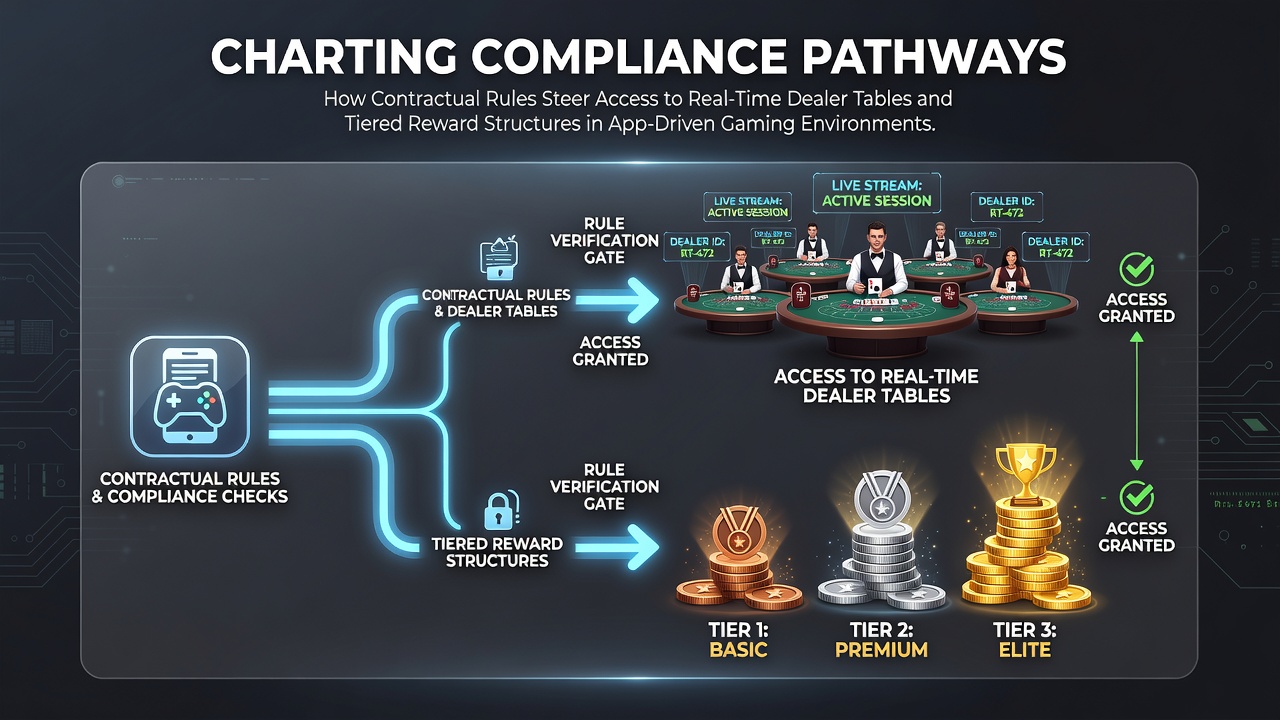
Charting Compliance Pathways: How Contractual Rules Steer Access to Real-Time Dealer Tables and Tiered Reward Structures in App-Driven Gaming Environments
Contractual frameworks in app-driven gaming environments establish the boundaries for player entry into real-time dealer tables while also defining eligibility for tiered reward structures, and these rules operate through licensing agreements that operators must follow across multiple jurisdictions. Regulatory bodies in regions such as Nevada and Ontario set baseline requirements that feed directly into the contracts users accept when downloading casino applications, which means access to live tables often hinges on verification steps outlined in those documents.
Contractual Foundations Shape Table Access
Operators embed specific clauses in their terms that require identity checks, age verification, and geographic restrictions before granting entry to live dealer streams, and these provisions align with broader licensing conditions that change as new standards take effect. In August 2026 several platforms revised their user agreements to incorporate updated data-sharing protocols with third-party compliance services, which tightened the pathways for players seeking immediate access to roulette or blackjack tables staffed by real dealers. Data from the Nevada Gaming Control Board shows that such contractual adjustments reduced unauthorized logins by measurable margins in the preceding quarter.
App developers integrate these rules into the onboarding flow so that users encounter the conditions before they reach the lobby, and failure to meet the criteria blocks progression to dealer-hosted games while still permitting limited play in automated modes. Observers note that this structure keeps operators in line with regional mandates without disrupting the overall user experience for those who qualify.
Tiered Rewards Tied to Compliance Milestones
Reward tiers in these environments function through contractual milestones that track deposit frequency, play volume, and account longevity, and each level unlocks specific benefits only after the system confirms ongoing adherence to the original agreement terms. Players advance from basic access to premium dealer tables and enhanced reward multipliers once the app verifies that their activity matches the criteria listed in the contract, which often includes responsible gaming commitments. Research from the American Gaming Association indicates that structured tier systems encourage sustained engagement while maintaining regulatory oversight through built-in reporting features.
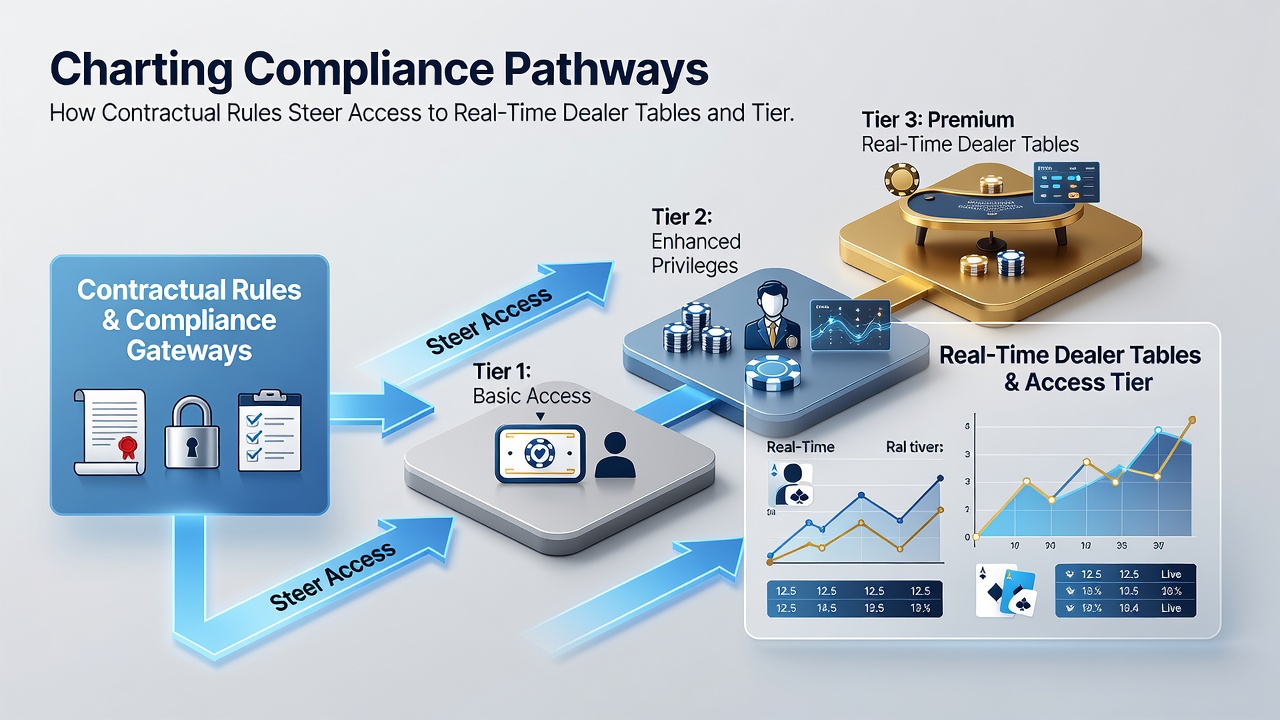
What's interesting is how these reward ladders connect back to the same contractual rules that control table access, creating a single compliance pathway that governs both entry and advancement. Contracts frequently include clauses that pause or revoke tier benefits if a player violates geographic or age requirements later in the relationship, and this mechanism helps operators respond quickly to regulatory audits.
App Architecture Enforces the Rules
Mobile applications translate contractual language into technical controls such as geofencing, real-time ID scanning, and automated transaction monitoring, and these features activate before a user can join a live dealer session or claim tier-based bonuses. Industry reports from iGaming Ontario highlight that app-based enforcement has become the primary method for meeting cross-border compliance standards because it allows immediate adjustments when rules shift in different markets. Players who meet the initial contractual hurdles gain smoother navigation through dealer tables, while those who fall short encounter clear notifications that direct them to alternative game types.
Yet the same architecture supports tiered rewards by logging play data against the milestones specified in the user agreement, and this dual function reduces the need for separate compliance systems. Operators update these technical layers regularly to reflect changes in licensing conditions, which keeps both table access and reward eligibility aligned with current requirements.
Pathways Across Jurisdictions
Compliance pathways differ by region because each licensing body imposes distinct contractual expectations on operators, and app developers must maintain separate rule sets for users in the United States, Canada, and other markets. A single application therefore routes players through different verification sequences depending on their location, which determines whether they can reach real-time dealer tables or unlock higher reward tiers. Figures from regulatory filings show that operators with multi-jurisdictional operations invest heavily in modular contract templates that adapt without requiring full app rebuilds.
Those who've studied these systems observe that the interconnected nature of payments, promotions, and live play creates additional contractual layers, and each layer must remain consistent with the overarching licensing agreement. This approach allows platforms to scale while preserving the integrity of access controls and reward structures.
Conclusion
Contractual rules continue to serve as the steering mechanism for both real-time dealer table access and tiered reward progression in app-driven gaming, and the technical implementations within mobile platforms keep these pathways operational across evolving regulatory landscapes. Updates scheduled around August 2026 demonstrate how operators adjust these frameworks to maintain compliance without interrupting service for qualified users, and the result is a structured environment where eligibility depends directly on adherence to documented conditions.